
Tiny Logic
A downloadable game for Windows, macOS, and Linux
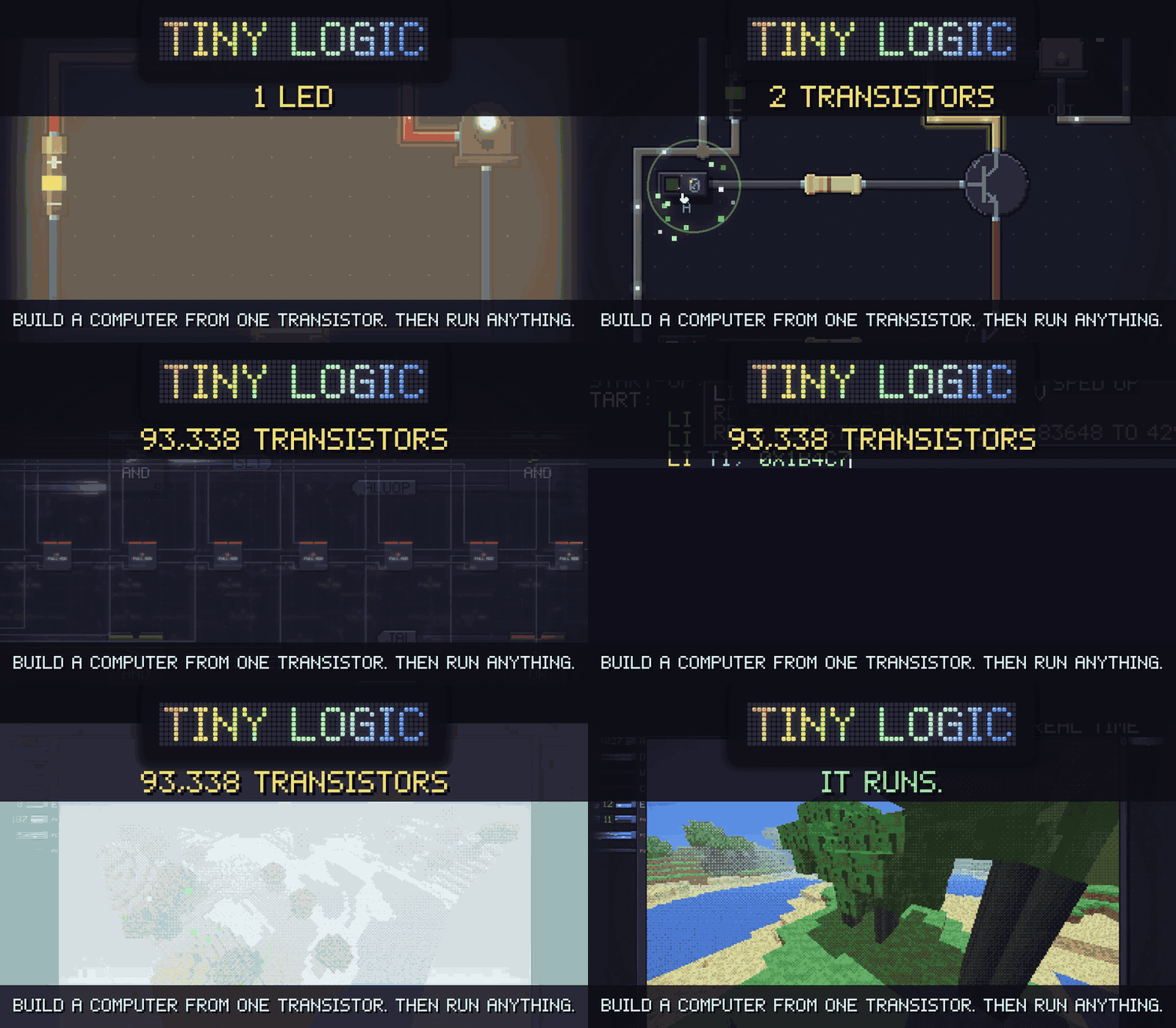
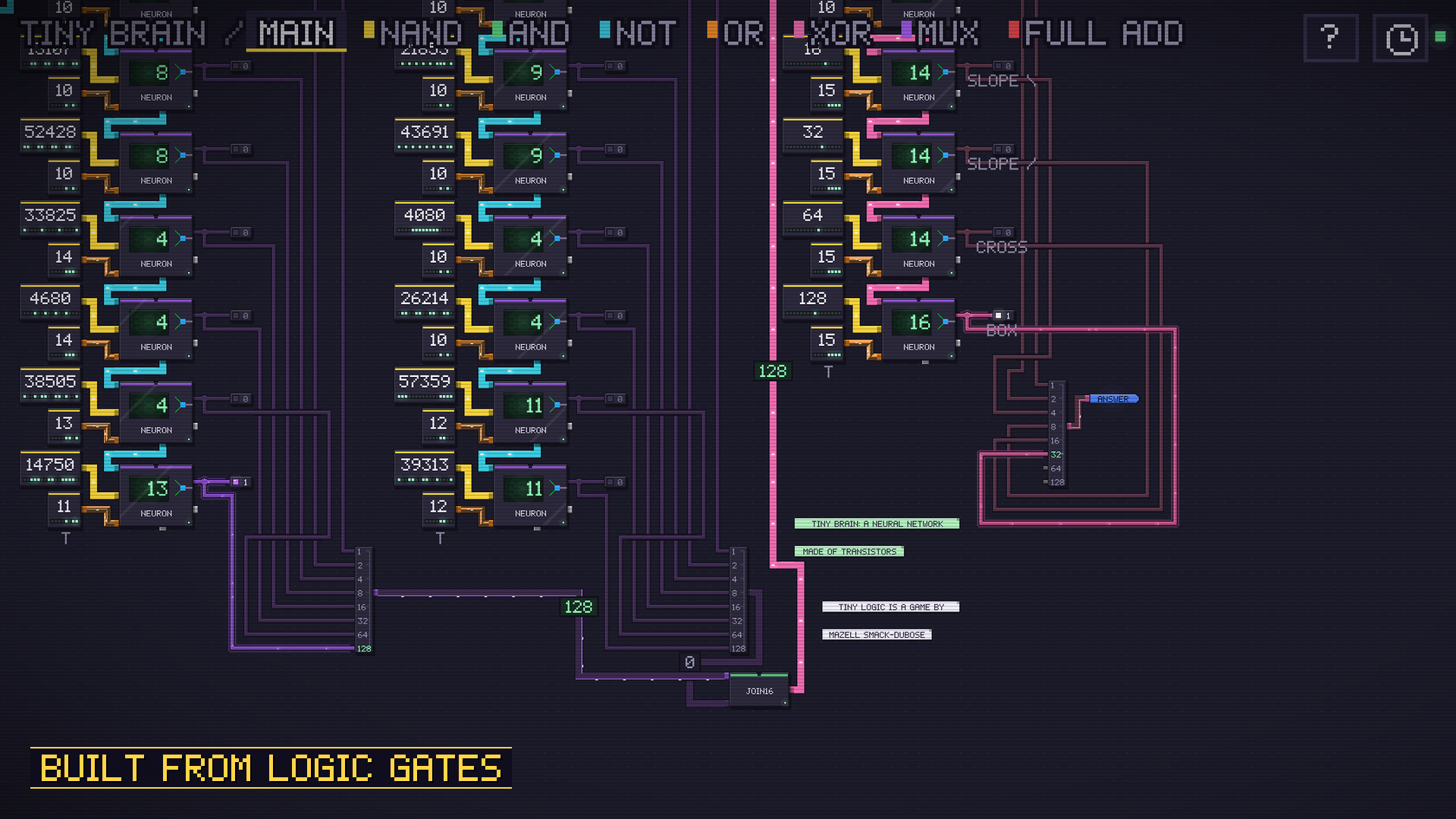
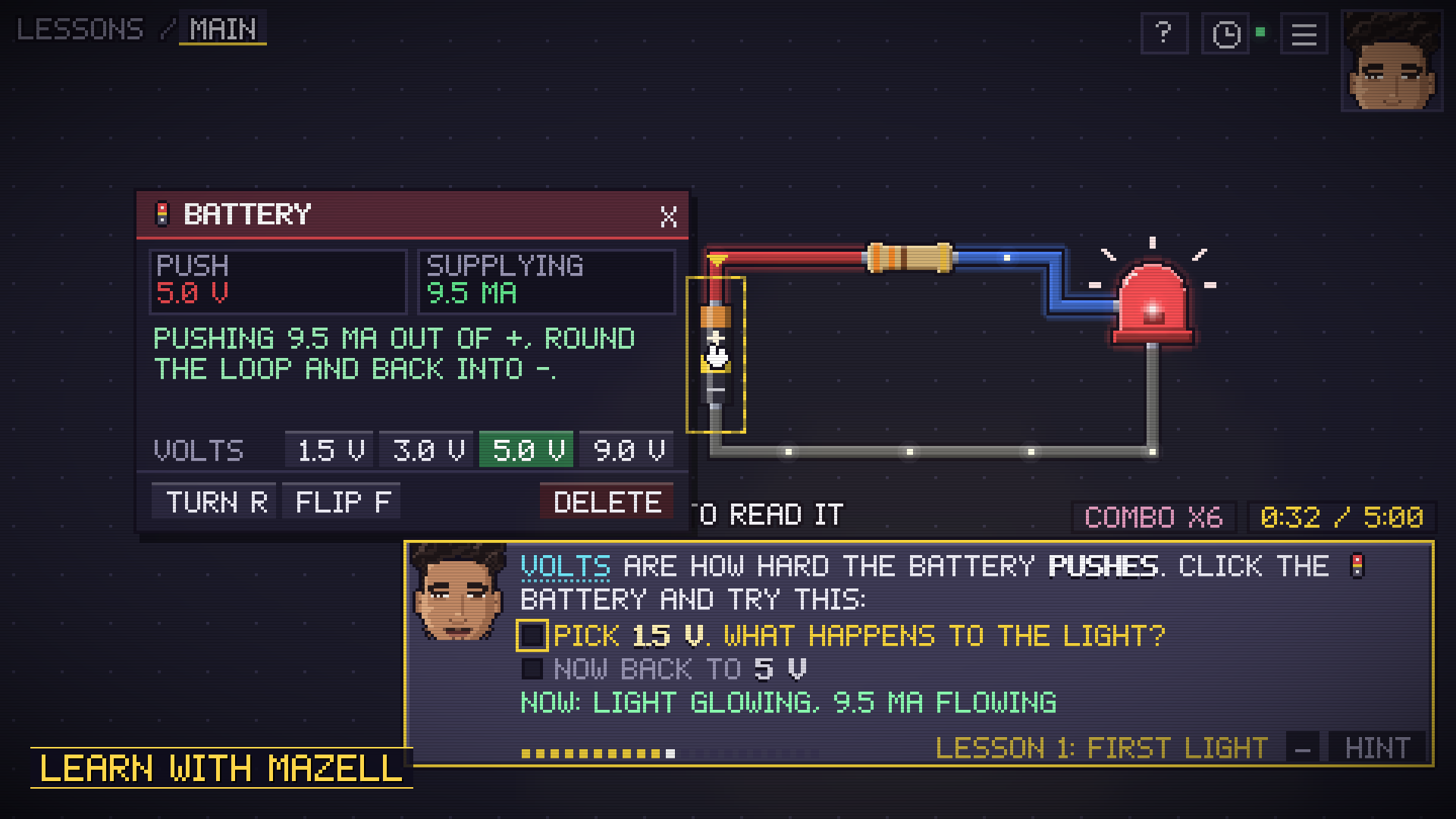
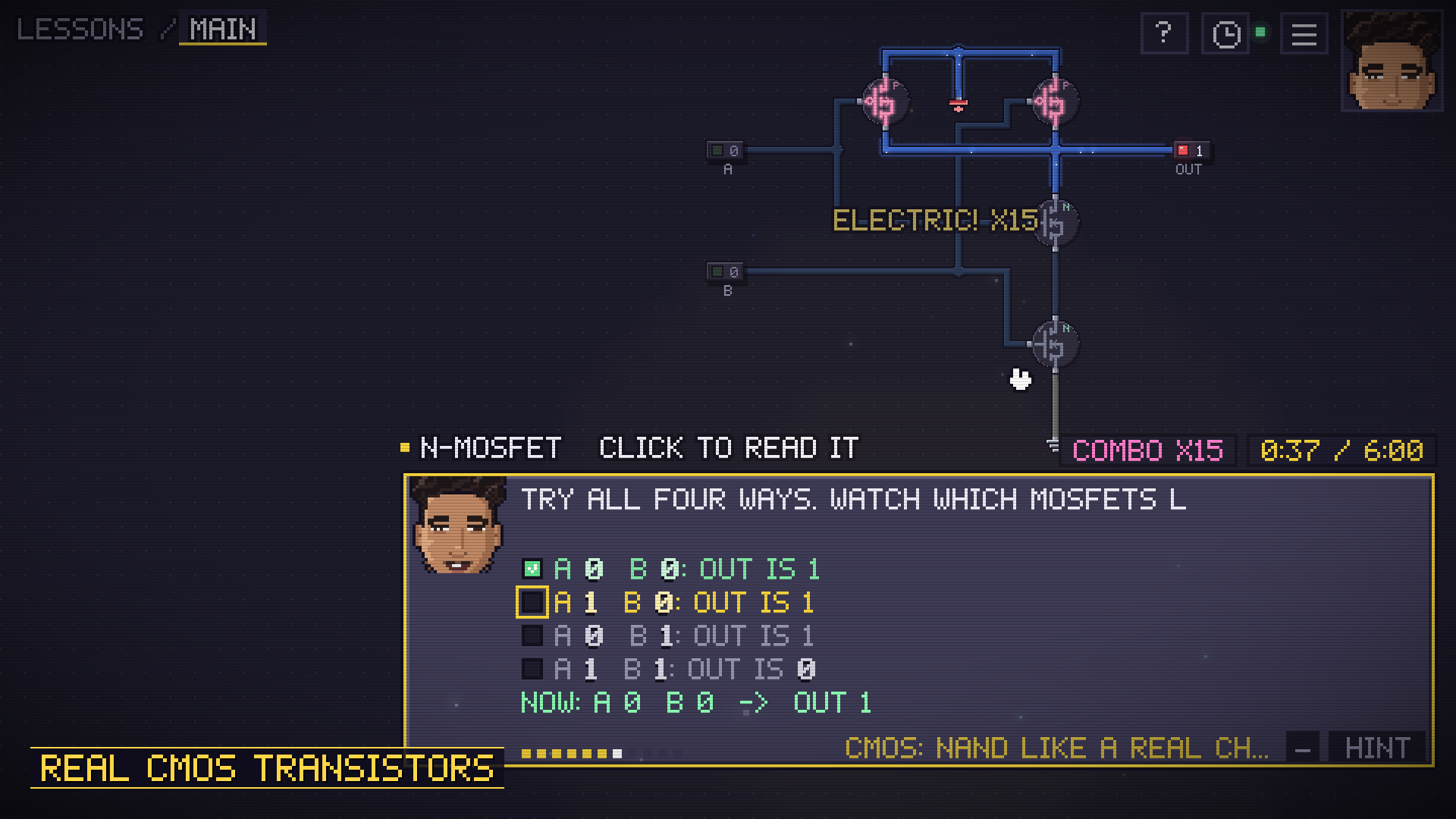
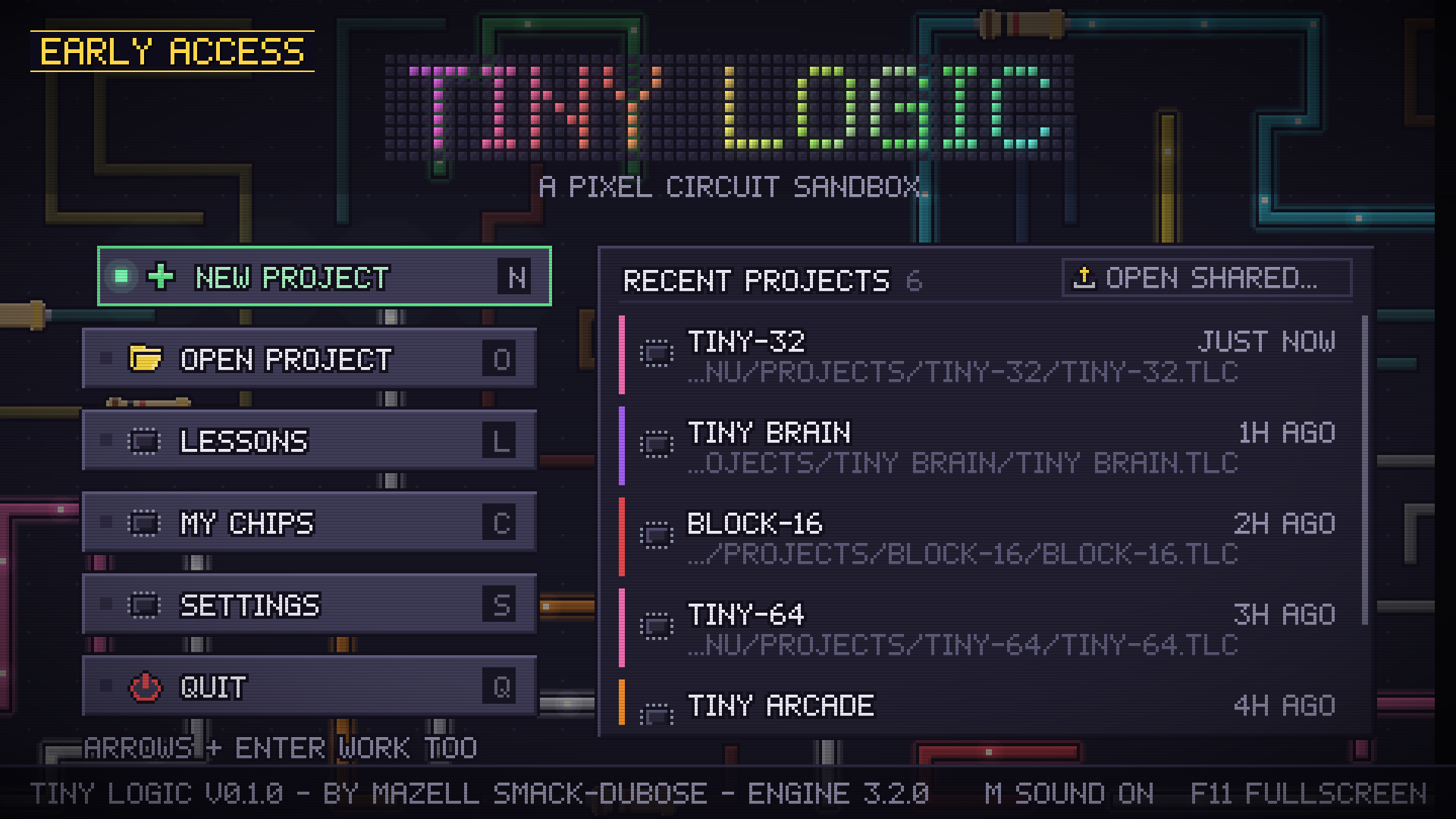
Every gate is simulated. Every computer you build actually computes. Start with a battery and an LED, wire up transistors, and keep going until your own CPU is running your own code.
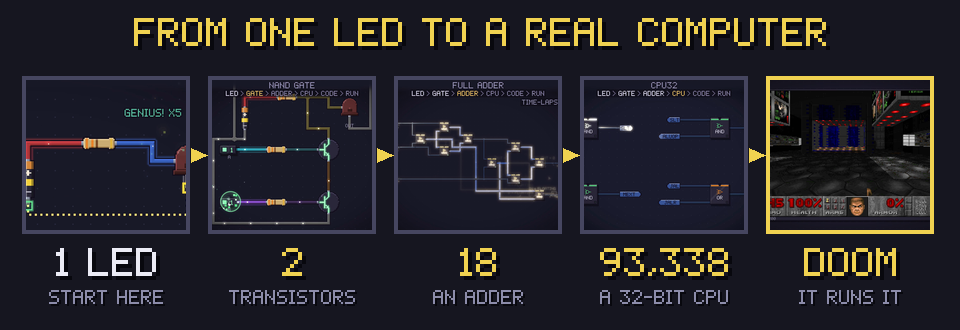
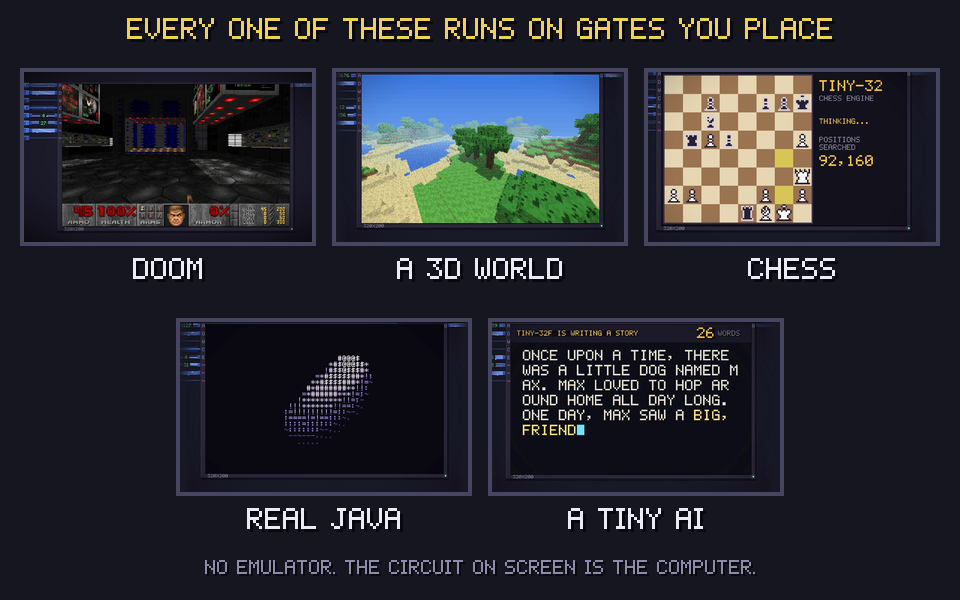

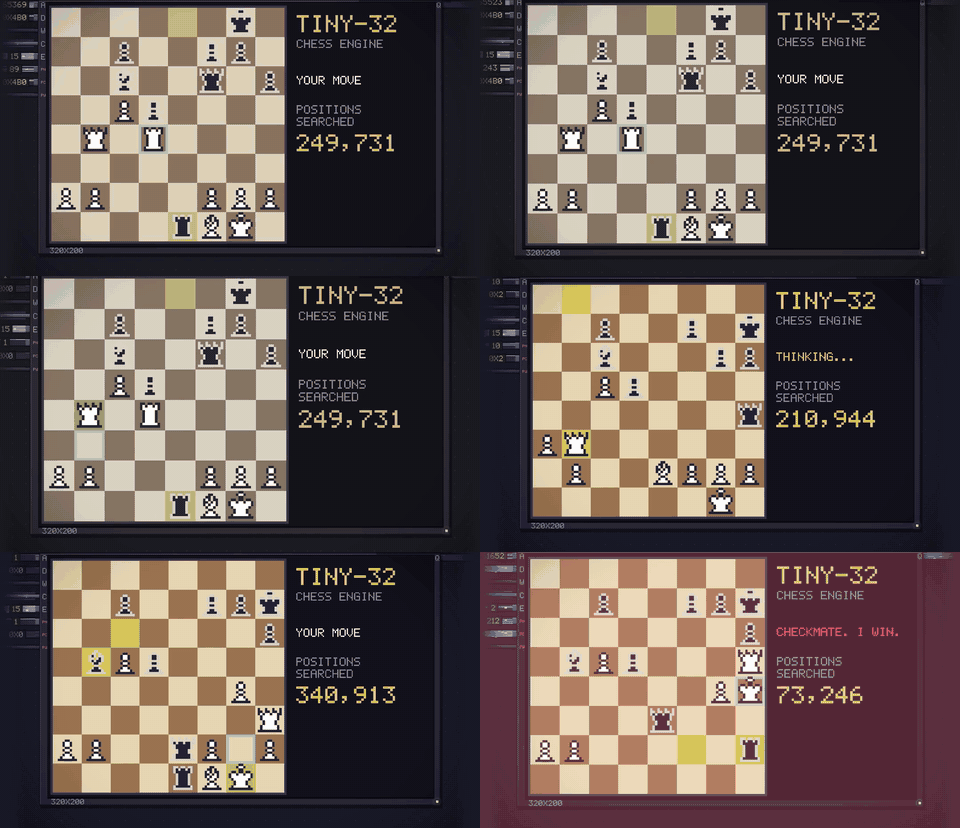
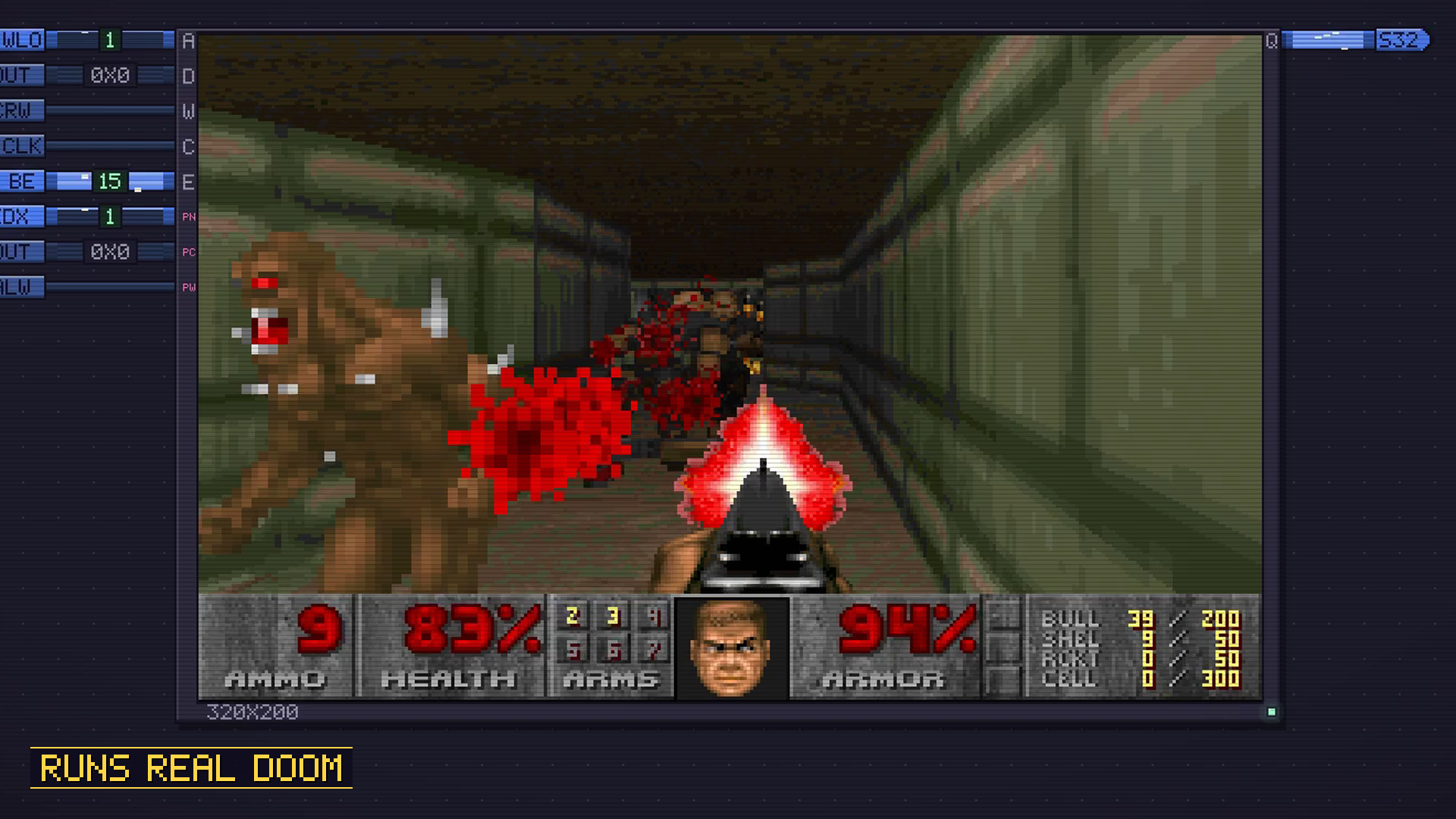
No emulator underneath. TINY-32 is a full 32-bit RISC-V computer made of 93,338 transistors. It passes the official RISC-V test suite and runs real DOOM at full speed. It's free and open source: tiny-logic-doom · tiny-nes


Early access is half the price of the full release, includes every update, and every itch.io buyer gets a free Steam key when it launches. The price goes up at the Steam launch.
Solo project, built with its players. Talk to me on Discord or Instagram @whoismuzzy.
Installing
Windows: Defender may flag Tiny Logic as Trojan:Win32/Wacatac.C!ml. It's a false positive from the cloud machine-learning scanner (the "ml"): the engine compiles your circuit into machine code while you play, which looks unusual to new-file heuristics. Your PC's virus definitions find no malware, and every build is sent to Microsoft for review. Code signing is coming.
- Make a folder, for example
C:\Games\Tiny Logic. - Windows Security → Virus & threat protection → Manage settings → Exclusions → Add an exclusion → Folder, and pick it.
- Extract the zip into that folder and run
TinyLogic.exe. On "Windows protected your PC," click More info → Run anyway.
Already deleted? Windows Security → Protection history → Tiny Logic → Actions → Restore. Prefer not to add an exclusion? Totally fair: wait for the signed build, or use the itch app.
Mac: not notarized yet. Right-click the app → Open. If blocked: System Settings → Privacy & Security → Open Anyway.
Linux: extract and run (X11 and Wayland). Needs glibc 2.38+ for now (Ubuntu 24.04, Debian Trixie or newer). Older distros are supported from the next update.
Requirements: any 64-bit Windows, macOS (Apple Silicon or Intel) or Linux PC from the last ~8 years with 8 GB RAM. 4+ cores recommended for the big CPUs and DOOM.
Privacy: anonymous stats and crash reports are sent only if you say yes, and you can change it any time. Privacy policy.
Purchase
In order to download this game you must purchase it at or above the minimum price of $9.99 USD. You will get access to the following files:
Download demo
Comments
Log in with itch.io to leave a comment.
Played the demo, bought it and I have to say the game is pretty cool, maybe even a bit better than Turing Complete.
I have to say though, I dislike the flashy animations and effects from the lessons, and I wish there was an option to disable them, or have the ability to skip lessons or do them unguided. (But I guess that's what sandbox is for)
Overall a very cool tool disguised as a game :)
I'd also like to add that I hate that wires cannot overlap and I have to space things out by a lot
wires can overlap though…
ammmmmmmmmaaaaazzzzzzzzzzzzzzzzing
love it
to people who think this is just a game:
This is seriously impressive and can rival actual professional digital logic simulators and for the price of 10$ its honestly a steal
Do you have any plans to release on Steam?
On the page, it says all early access it buyers get Steam for free planned for mid-late November
I bought it right away.I’ll be cheering you on until the Steam release.You are a Korean who likes games
Bug report: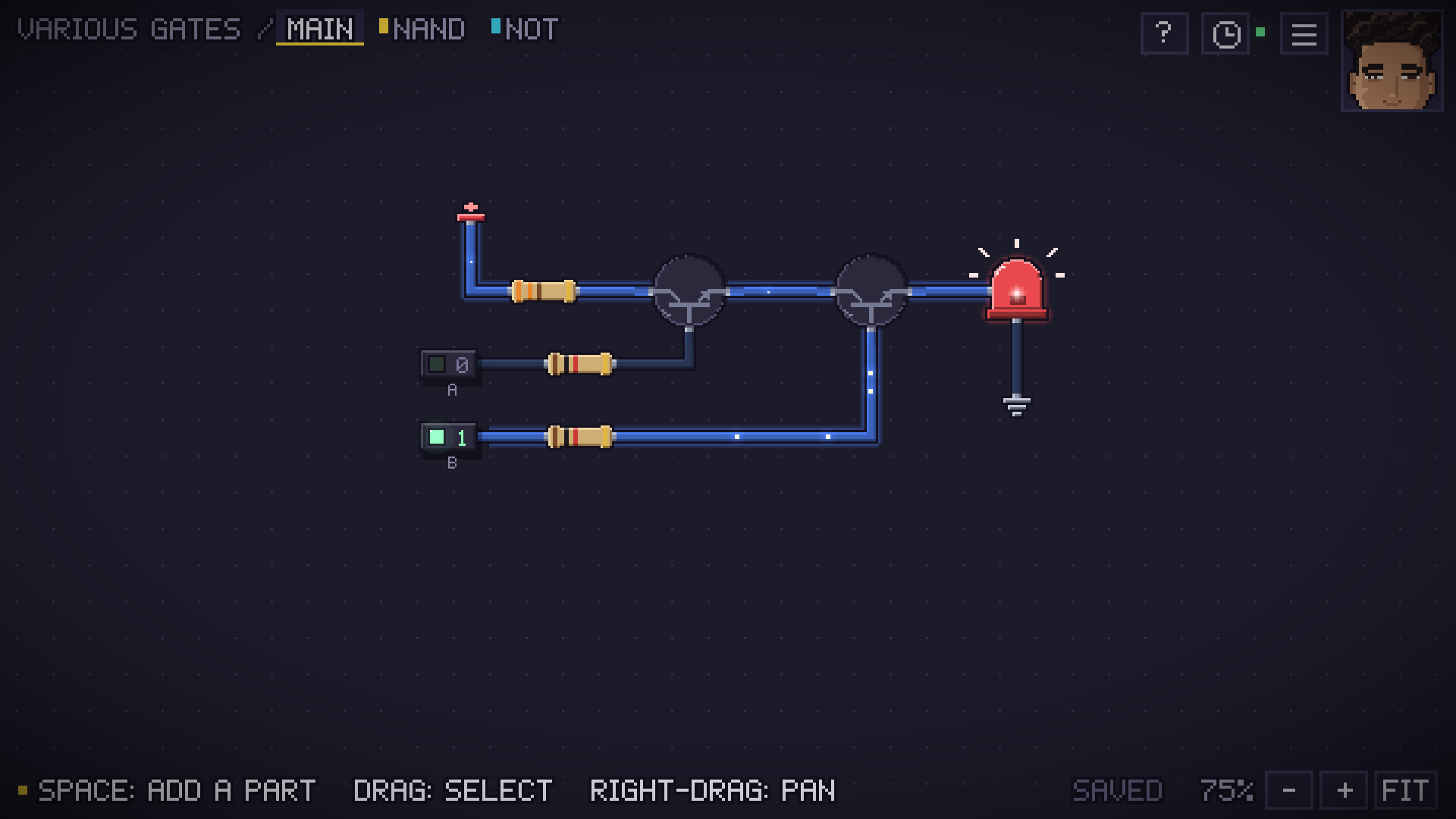 This should be a functional AND gate. Also, the right-hand transistor is outputting 12mA and the LED is reading 14mA in. Weird.
not a bug, it's actually real transistor behavior 🙏🏽 your LED sits after the last transistor's output (emitter), so when B is on, B's base current flows through the base, out the emitter and straight into your LED, even with A off. that's also your 12 vs 14 mA: emitter current = collector current + base current, so B's ~2 mA joins in. a real breadboard does the same thing. fix: put the LED before the transistors (+ → resistor → LED → transistor → transistor → ground), each input through a resistor into a base. I built both in game: yours lights on 0/1, the fixed one is a perfect AND. for bug reports please use the discord (/bug), it's on the game page and in the download instructions, so I can actually track them: discord.gg/tinylogic
Thanks for answering! The fact that some current actually flows between gate and emitter, and that it's enough current to light an LED is kinda funky!
Played the demo, this game is something I'd been hoping to exist for so long. Will be checking out the full game!
the future is here
this person does not sleep
this is fu*king crazy BTW I'm a game dev and learning computer science (i have a basic knowledge about logic gates , cpu architecture but very good at programming) and doing some engineering too so I know how hard this shit is.
This is wild. Going from a single transistor all the way to running DOOM on a CPU you built yourself is such a cool idea. It's clear how much work went into this, especially as a solo dev. Congrats on the early access launch!
thank you, there’s bigger and better things to come especially as a I get more reach and resources to build the game. Thank you again for your comment! :)
That’s an amazing game idea, i’ll definetly check it out
Thank you, I hope once you do that you do enjoy it :)